

DASTA joins hands with NXPO to elevate Thai tourism toward “Regenerative Tourism” for the economical, ecological and social development

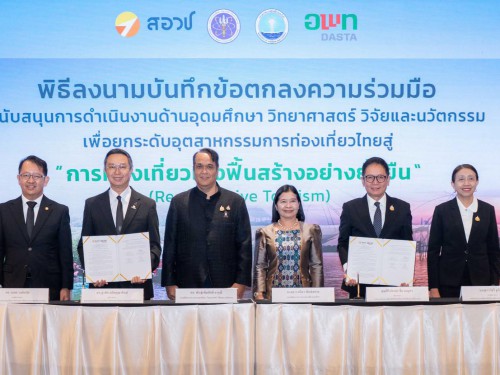
On 11th September 2026, Designated Areas for Sustainable Tourism Administration (Public Organization) or DASTA, joined hands with the Office of the National Higher Education, Science, Research and Innovation Policy Council (NXPO) to co-host the Signing Ceremony for “the Memorandum of Understanding (MoU) on Utilizing Higher Education, Science, Research and Innovation to Elevate Thailand’s Tourism Industry toward Regenerative Tourism” at the Kamolthip Ballroom 3, Sukosol Hotel, Bangkok.
The MoU Signing Ceremony was honored with the presence of Dr. Punpermsak Aruni Deputy Permanent Secretary for Higher Education, Science, Research and Innovation, and Ms. Wanida Phansa-ard, Deputy Permanent Secretary for Tourism and Sports as the esteemed witnesses, with two signing parties: Dr. Surachai Sathitkunarat, NXPO President, and Mr. Siripakorn Cheawsamoot, Director-General, DASTA, representing their respective organizations.
Dr. Surachai Sathitkunarat, NXPO President stated that “This cooperation is crucial in transforming Thailand’s tourism. NXPO has jointly designed and developed relevant policies for the utilization of the Mechanism of Higher Education, Science, Research and Innovation (อววน.) as a transfer tool to disseminate and implement relevant knowledge, researches, and innovations within DASTA’s Designated Areas for Sustainable Tourism. NXPO also co-developed science-based courses and measurement tools to create tourism destination models that foster sustainable environment conservation, local community participation, and eco-friendly income generation.”
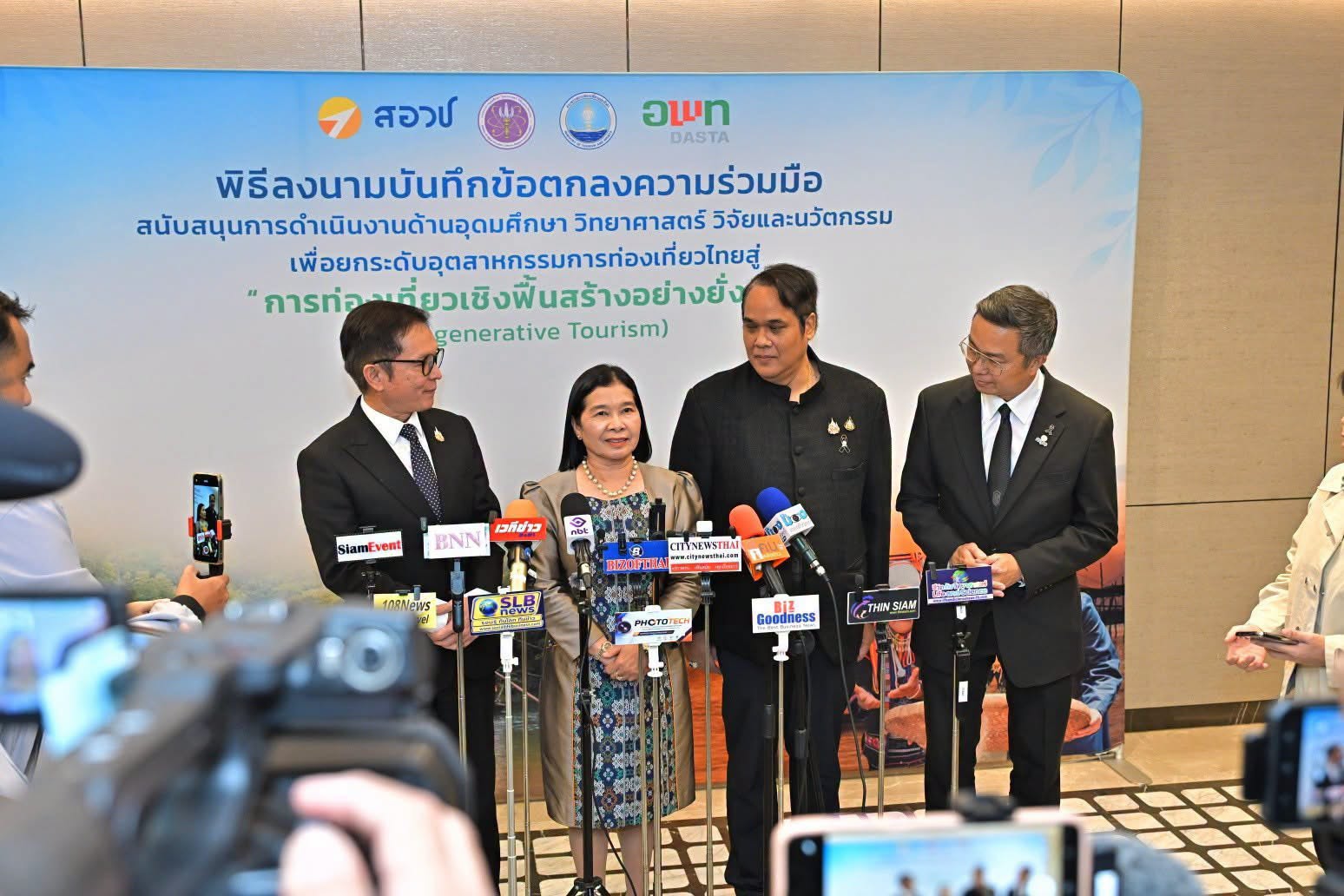
Mr. Siripakorn Cheawsamoot, Director-General, DASTA, stated that “The collaboration between DASTA and NXPO is a vital step in developing a strategic partnership mechanism. In addition to increasing the economic values, this collaboration will help specify the strategic directions on regenerative natural resources, environment, culture, way of life, and living quality of local communities across 4 “Living Lab” tourism destination models. These Living Labs cover 4 DASTA’s Designated Areas, namely 1) Koh Chang Archipelago and Vicinity Designated Area for Sustainable Tourism (DASTA Koh Chang Archipelago), 2) Songkhla Lagoon Designated Area for Sustainable Tourism (DASTA Songkhla Lagoon), 3) Chiang Rai Designated Area for Sustainable Tourism (DASTA Chiang Rai), and 4) Khung Bang Kachao Designated Area for Sustainable Tourism (DASTA Khung Bang Kachao).” As the important benchmark in driving Regenerative Tourism in Thailand, this collaboration focuses on 3 core elements:
A– Academic and Innovation Support (AI): utilizing academic researches and innovations in line with the Mechanism of Higher Education, Science, Research and Innovation (อววน.) as basis for development;
B – Best Practices (Tangible KPIs): creating best practises models with tangible KPIs and scientifically provable results;
C – Cross-sector Collaboration: integrating cross-industry and cross-sector collaboration for inclusive and sustainable tourism growth in Thailand.

Additionally, there is a special panel discussion titled “ECOLIFE in C and Regenerative Tourism” by Ms. Siraphan Wattanajinda and Mr. Piphat Apiraktanakorn, founders of ECOLIFE Platform. During the event, both experts discussed the integration and utilization of ECOLIFE Platform in fostering participatory collaboration on sustainability and connectivity between tourists, tourism service providers and local communities.
The collaboration between both organizations covers the implementation of the Regenerative Tourism Labs strategic policies, tangible and science-based KPIs, as well as capability building for tourism personnel and local communities, representing Thailand’s tourism industry’s important transition benchmark from the mitigation-focused environment conservation to the positive-impact-focused solutions that benefit natural, social and cultural aspects of local destinations. This ultimately and concretely sets up the groundwork for the tourism industry in Thailand to become stable, prosperous and sustainable.

 Share